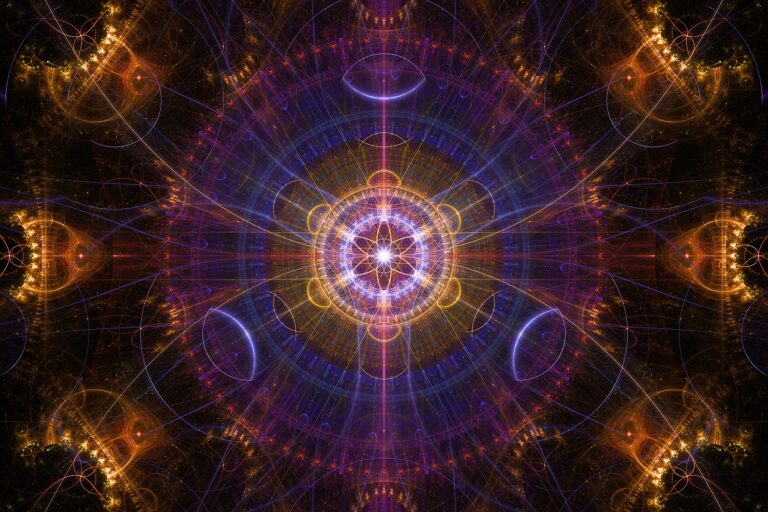
Meditation in Motion: Immersive Fractal Art as Spiritual Practice
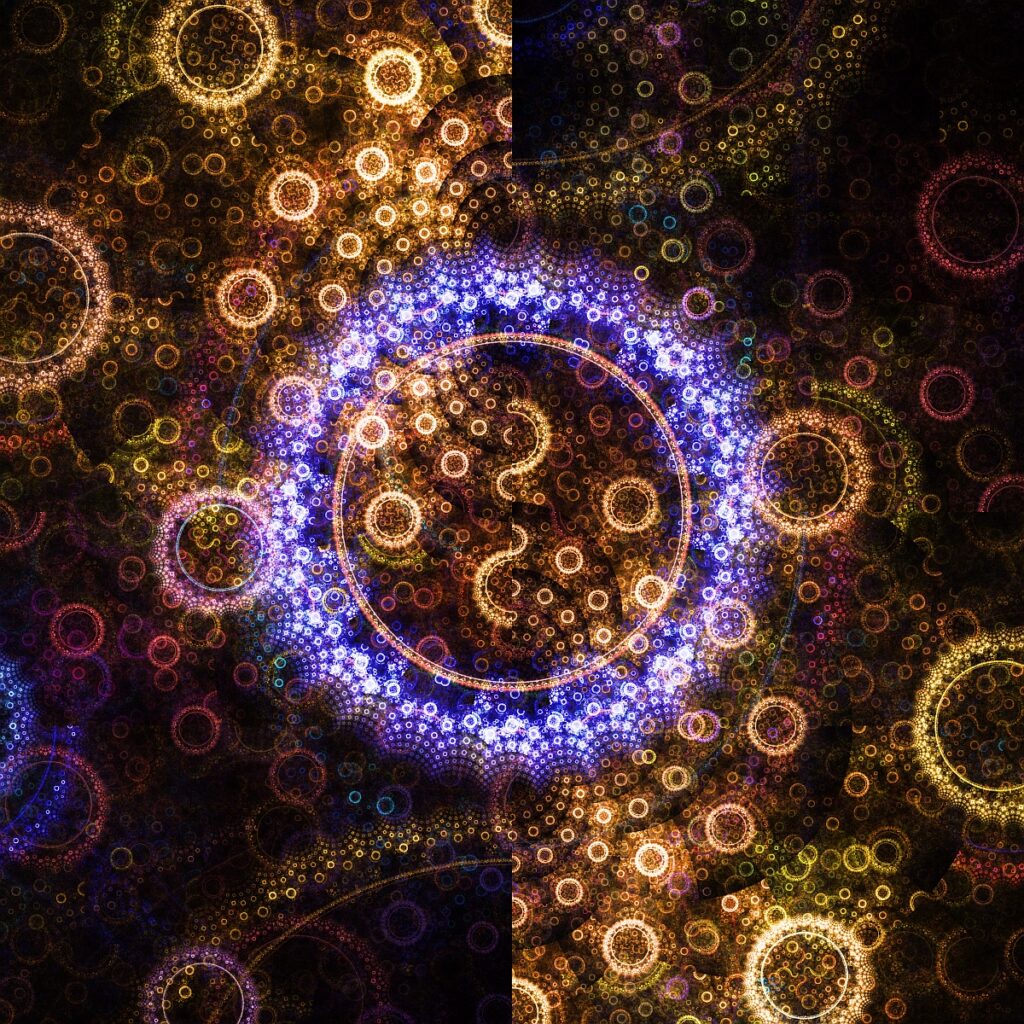
Step into a world where meditation breaks free from stillness, and art becomes a living, evolving guide. In this age of digital abundance, many of us long for mindful sanctuary—yet the traditional approach of silent cushions and rigid techniques doesn’t resonate with everyone. What if sanctuary could be found not just through closing the eyes, but by immersing them in ever-unfolding landscapes of color and pattern? As artists and seekers, we’re discovering that fractal art—those mesmerizing cascades of self-repeating geometry—can transform our screens, and our minds, into portals of presence. Welcome to meditation in motion.
Redefining Meditation: From Stillness to Sensory Immersion
For centuries, meditation has been painted as an act of stillness: a quiet room, a focused mind, a single unmoving statue in the flow of time. Yet traditions worldwide have always embraced more than silence.
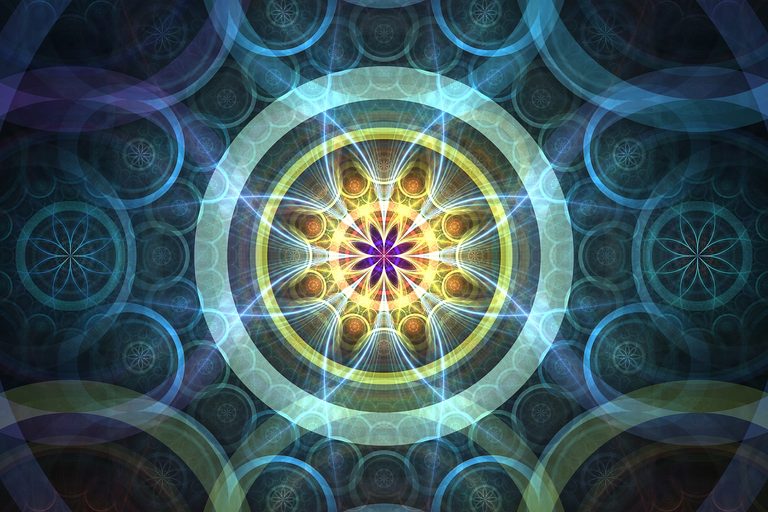
- In Buddhism, intricate mandalas serve as visual anchors for contemplation, their symmetry fostering mental clarity as the gaze softens across their lines.
- Christian contemplatives once gazed upon stained glass and golden icons, letting the interplay of color and form draw them into prayerful reverie.
- Hindu and Tantric practice offers the yantra—a sacred geometry to be traced by the spirit’s attention, each line a path inward.
Even modern neuroscience suggests that meditation is less about being motionless and more about anchoring attention—on breath, sound, or pattern—until the restless mind quiets, and a subtler awareness arises. Digital artists today echo these traditions, brewing immersive experiences where art is not just watched, but entered. In this new mode, the gaze becomes a vehicle for mindfulness; the artwork, a silent mantra repeating through shifting form.
The Science of Fractals: Nature’s Mantra for the Mind
But why fractal art, specifically? Fractals are nature’s fingerprints: endlessly patterned, self-similar shapes that wind their way through everything from fern leaves to ocean coasts, from branching rivers to the electric tangle of our neurons. Popularized by the mesmerizing “Mandelbrot set,” fractals are not just mathematically intriguing—they exert a subtle magic on the human psyche.
Recent research reveals that people feel calmer and more focused when exposed to fractal patterns—especially those with a mid-range complexity that echo the balance and unpredictability of nature. Staring into the spiraling heart of a digital fractal is not unlike gazing at waves or clouds: a dance of order and chaos that invites surrender. The mind, lulled by repetition and surprise, drifts into a form of visual meditation.
Think of fractal art as a visual mantra: instead of chanting a word, you let your awareness rest on a never-ending cascade of curves, each echoing the last yet perpetually new. This gentle repetition, paired with variation, draws us out of mental loops and into open presence—making fractal art a living, breathing gateway to meditation.

Sacred Geometry: The Forgotten Technology of Contemplation
Long before pixels and headsets, humans wove geometry into the heart of their sacred spaces. The Flower of Life, the Sri Yantra, the rose windows of Gothic cathedrals—these were not just ornamental wonders but contemplative technologies, designed to align the senses with cosmic order. The repeating, interlocking shapes offered a harmonizing vision, whispering of unity and the elegant hidden laws beneath everyday chaos.
Sacred geometry transcends time and tradition because it works on a deep, pre-verbal level. As we take in these forms—be it through colored glass, stone mosaics, or, now, shimmering pixels—the mind’s chattering yields to symmetry. We sense a pattern larger than ourselves and remember, however briefly, our place in an ordered universe.
Today, digital fractal art inherits this mantle. Generative animations, virtual mandalas, and projection-mapped architecture offer a modern reimagining of the temple. The screen becomes a window, the geometry a bridge, calling us not only to marvel but to merge with the mystery.
Meditation in Motion: A Practice for the Connected Age
Meditation is always a collaboration—a conversation between intention and environment, presence and pattern. With immersive fractal art, this collaboration gains new dimensions. No longer passive observers, viewers become participants: the artwork offers a dynamic structure, and we meet it with our attention and breath.
How to Practice “Fractal Gazing Meditation”
- Set the Scene: Choose a fractal animation or geometric work that resonates with you. Dim the lights, free your hands, and expand the image if possible.
- Synchronize the Breath: Begin slow, even breathing. Let the inhale bring clarity, and the exhale invite relaxation.
- Soft Gaze: Allow your eyes to gently rest upon the evolving forms—neither staring nor looking away. Notice repetition, symmetry, and pattern.
- Notice Shifts: As time unfolds, observe the movement of your thoughts. Does the mind quiet? Do emotions surface, release, or transform?
Through this simple practice, what begins as visual entertainment can unfold into an inner pilgrimage. Fractal art becomes both a map and a companion, inviting you deeper with every click and curve.
Chaos to Cosmos: The Inner Alchemy of Patterns
The spiritual power of fractal art is more than calming or hypnotic—it’s alchemical. Just as meditation teaches us to witness the swirl of thoughts without being swept away, fractal patterns model the transformation from apparent chaos to unexpected order. As we gaze into their labyrinthine depths, we witness the emergence of beauty from noise. Each spiral, node, and tessellation is a small act of inner clarification: a reminder that even the wildest mind can reveal hidden harmony, given patience and attention.
As artists and seekers, this is the true magic: co-creating meaning in the supple space between form and feeling. The artwork offers structure, but it’s our presence that turns geometry into mindfulness.
The Frequencies of Color and Form: Tuning the Spirit
It isn’t only the shapes that move us; each choice of color, symmetry, and movement vibrates on a subtle frequency, shaping mood and opening windows within. Deep blues and greens may anchor and ground, spirals of gold and crimson can evoke expansion and heart-centered focus. Some fractals soothe the nervous system, others ignite wonder or creative flow.
Each digital canvas is, in a sense, a tuning fork for consciousness—an intentional arrangement of energy that invites the viewer back to their own inner music. This is why, at michaldunaj.art, every pattern is crafted not only as an object of beauty but as a tool for transformation.
From Temples to Technology: A New Era of Spiritual Art
What began in candle-lit cathedrals and stone-prismed sanctuaries now continues in the glow of our devices. Today’s digital artists are builders of inner temples, sculpting light and code to offer spaces of mindful refuge. Through video, virtual reality, or even simple screensavers, fractal art becomes a portable sanctuary, ready to guide us into presence whether at home, at work, or in community.
And this is only the beginning. Immersive installations and VR fractal experiences hint at a future where art and meditation are inseparable—a new discipline of mindful creativity where everyone is invited to explore.
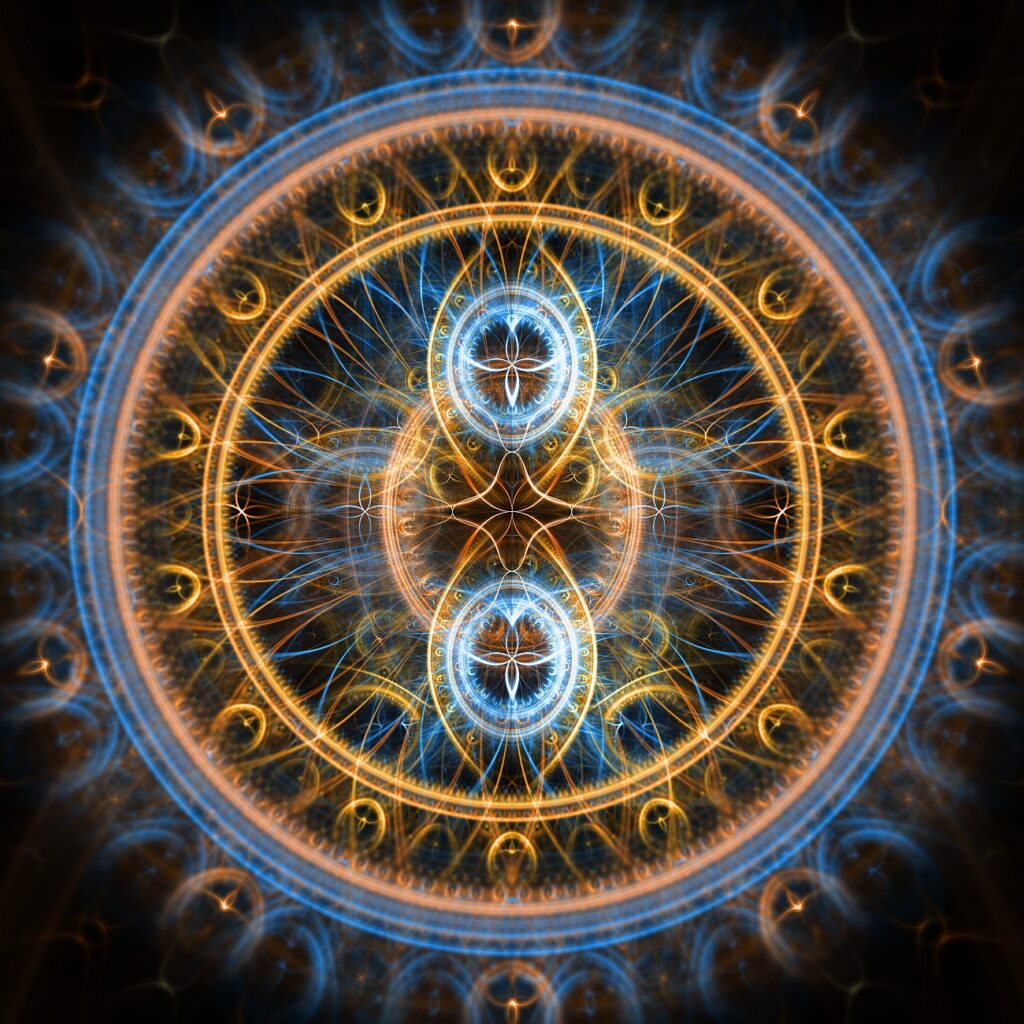
Bringing Meditation in Motion into Your Life
Meditation need not be a distant, esoteric skill. With the tools of immersive fractal art, anyone can access states of peace and focus. If you’ve found traditional meditation too rigid or abstract, let the fluid patterns of fractal geometry be your invitation—your gentle gateway—into a practice that meets you where you are.
I encourage you to explore the galleries and videos here, try a session of fractal gazing meditation, and share your experience. In weaving together art, pattern, and presence, you may just discover your own unique rhythm—the authentic heart of meditation in motion.
Ready to experiment? Choose a fractal piece from michaldunaj.art, set a timer for ten minutes, and give yourself permission to simply observe, breathe, and feel. Notice what shifts inside, and let the patterns carry you back to yourself—even in the midst of a busy, connected world.