Fractals in the Nervous System: Why Recursive Patterns Soothe the Soul
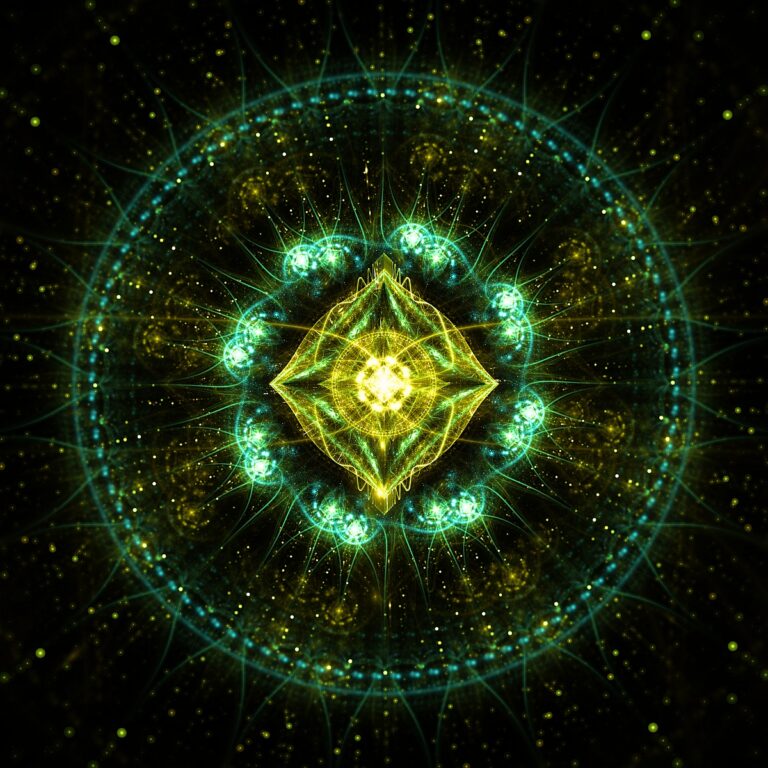
Pause for a moment and picture the branching of a bare winter tree, the whorls of a Romanesco broccoli, or the endless self-replication of a digital Mandelbrot set. What if the comfort we find in these shapes is not a mere coincidence, but a reflection of something deep within our minds—and perhaps our spirits? At the intersection of art, neuroscience, and spirituality, fractals invite us into a surprisingly profound contemplation: why do recursive patterns feel both artistically compelling and spiritually calming?
What Are Fractals? Patterns from Nature to Neurons
Fractals are patterns that repeat at different scales—complex shapes built from simple rules, endlessly self-similar. Coastlines, clouds, rivers, mountains, and lightning all echo this recursive geometry. Even our lungs, with their branching bronchi, and the neural arborization in our brains, mimic this natural aesthetic. Unlike rigid geometric shapes, fractals combine symmetry, repetition, and organic unpredictability, balancing order with chaos.
Mathematically, a fractal is any shape whose smaller details echo the whole: zoom in, and you’ll find the same motifs playing out again and again. This quality—called “self-similarity”—is the signature of the fractal. Yet fractals aren’t just a mathematician’s curiosity. Spiritually and artistically, they reveal a cosmos woven from repeating intelligence, reminding us that the microcosm reflects the macrocosm.
How the Brain Responds to Fractals: The Science of Fractal Fluency
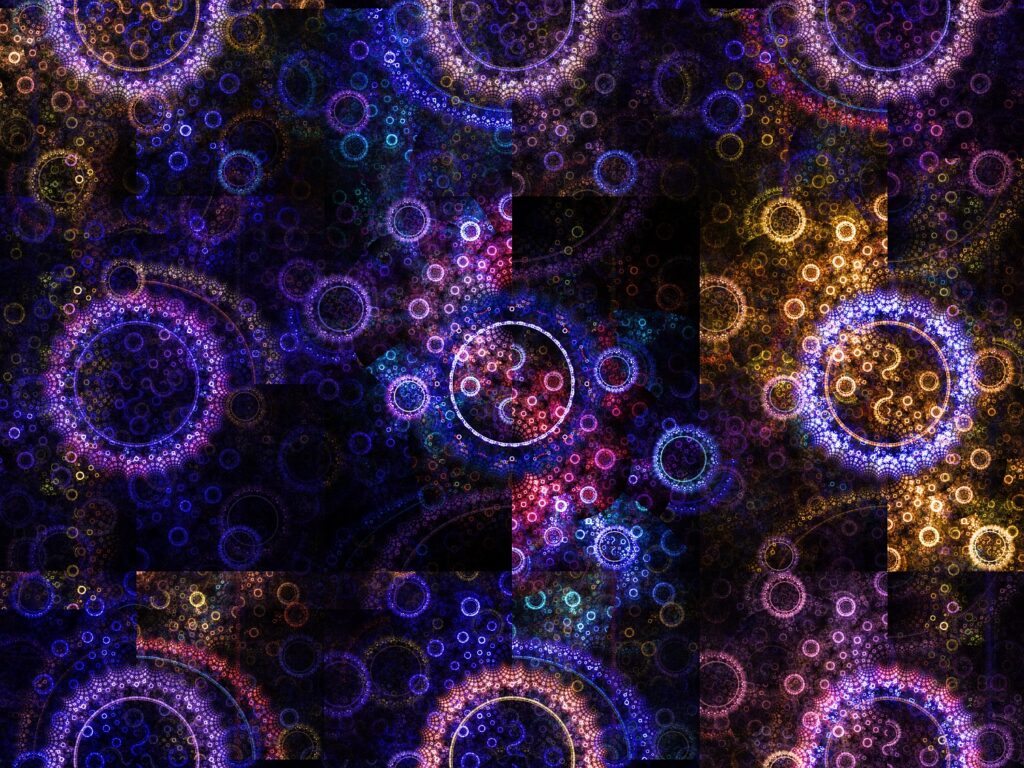
What if our love of fractals is more than cultural or symbolic? Over the past twenty years, neuroscience has uncovered a fascinating truth: our nervous systems respond to fractals in measurable, sometimes dramatic, ways. Research led by physicist Richard Taylor and others found that gazing at mid-complexity fractals—whether natural or artistic—reduces physiological stress by up to 60% in laboratory settings. Why?
Enter the idea of fractal fluency: our visual system is, to borrow from evolutionary biology, “hard-wired” to process certain fractal forms efficiently. Early humans developed among forests, rivers, and cloudscapes, their eyes and brains acclimated to these recurring patterns. Faced with such visual input, the nervous system relaxes, as if returning to a primordial home. Cognitive load drops; heart rate eases. The effect arises not only from real-world scenes—trees, waves, or branches—but also from artwork and architecture that echo fractal structures.
The Neuroaesthetics of Recursive Beauty
The young science of neuroaesthetics explores how art and beauty imprint themselves on the brain. Fractals seem to occupy a privileged space in this landscape. Unlike flat repetitions or rigid grids, their evolving, nested order delivers ongoing “visual interest” without overwhelming the senses. The brain gets the pleasure of recognition and prediction, but also a dash of novelty and surprise. This tension—between order and newness—may explain why fractals enchant both scientist and seeker alike.
- Stress Reduction: Exposure to natural fractals is correlated with lower cortisol levels and nervous system arousal.
- Increased Attention: Recursive patterns support gentle focus, often used in meditation rooms or restorative spaces.
- Sensory Pleasure: The patterns are easily processed, perceived as “beautiful,” and intuitively harmonious.
The ancient practice of tracing a labyrinth, contemplating a mandala, or weaving a patterned cloth may all subtly harness this neurological fluency—centuries before scientific language existed to describe it.
The Spiritual Resonance of Recursive Patterns
Why do fractals feel spiritually calming, not just intellectually fascinating? As artists and seekers, we find in recursion a metaphor for unity. Ancient spiritual traditions—Buddhist mandalas, Hindu yantras, Islamic tilework, and Celtic knots—deploy repeating, radiating forms as portals to contemplation. These patterns become a kind of perceptual prayer—an invitation to experience wholeness in a tangible, visual way.
Within fractal geometry lies a silent proposition: that the same intelligence, the same creative principle, organizes both the nebula and the neuron. To meditate on a recursive pattern is to sense one’s place in a much vaster design, as if the boundaries between self and cosmos gently dissolve. The pattern draws the eye ever inward and outward, echoing spiritual concepts such as:
- Unity in Diversity: The infinite variety within a single ordering principle
- Interconnection: Every segment partakes in the whole; no part stands alone
- Humility: Recognizing oneself as a node in the larger web
- Awe and Wonder: Encountering the unfathomable through a single repeating threshold
The same qualities that make fractals scientifically captivating render them spiritually nourishing. They hold beauty, calm, and mystery in a single visual gesture. For many, spending time with fractal patterns is akin to a wordless meditation—less about “solving” the shape, and more about entering into its rhythm.

The Role of Fractal Art: Beyond Image-Making
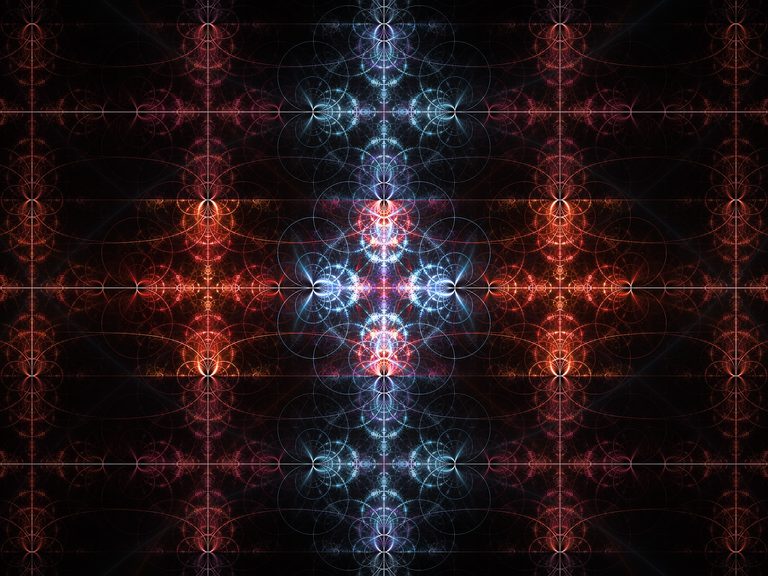
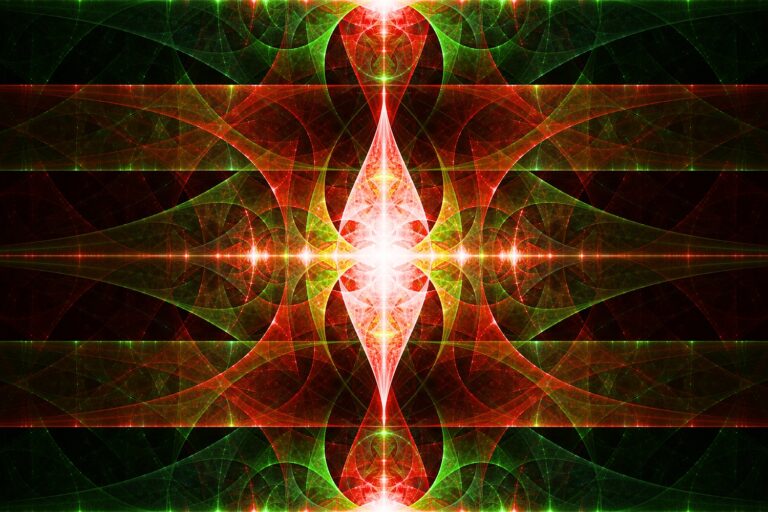
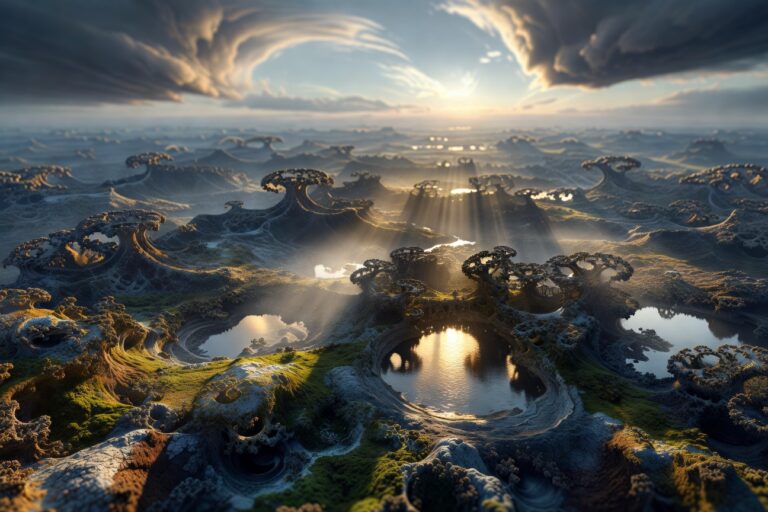
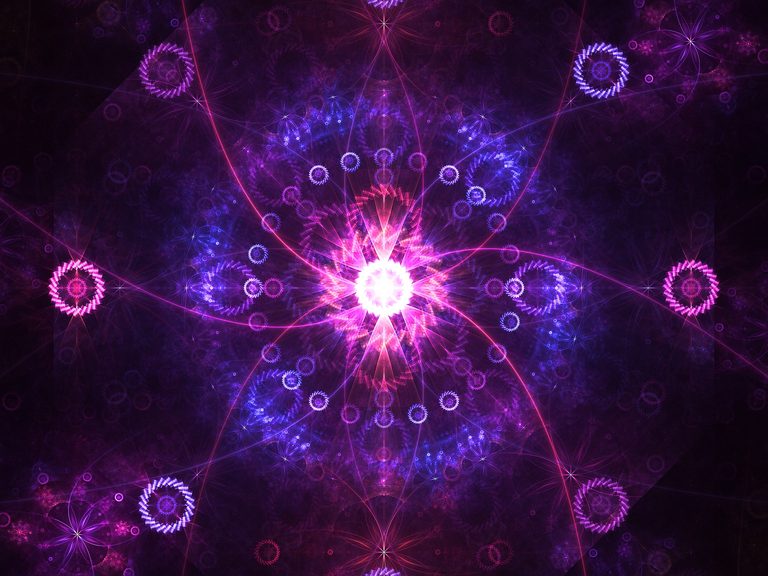
On michaldunaj.art, we celebrate the visual power of fractal art. But what truly sets this field apart isn’t just its technological bravura or mathematical virtuosity—it’s the way fractal art becomes an experiential field. Rather than mere decoration, these works invite immersion. Infinite zoom animations, layered digital compositions, and hand-crafted mandalas let viewers wander, lose themselves, or find themselves reflected in form.
For contemporary artists and digital creators, fractal art offers:
- A Bridge Between Worlds: Fusing science with spirituality, code with contemplation
- Visual Meditation: Art as an analog to inner practice—a portal to calm and clarity
- Unity of Chaos and Order: Building beauty from mathematical rules, yet allowing organic flow
- Living Geometry: Artworks that mirror, and sometimes even evoke, the living patterns of nature and the mind
Consider how a single fractal animation might absorb your attention, drawing you down like Alice into a mathematical Wonderland. The recursive transformations unfold, echoing breath, heartbeat, and inner process. It’s not only artists who benefit from engaging with fractals—anyone who gazes upon these forms can rediscover a meditative, restorative space. In this way, fractal art acts not just as artifact, but as experience—one that soothes the nervous system while pointing toward cosmic pattern.
From Pollock to Pixels: Art History Meets Recursion
Even before digital tools, artists like Jackson Pollock unknowingly embraced fractal form. Later analysis revealed that Pollock’s “drip” paintings possess the same recursive geometry as rivers or trees, explaining, in part, their hypnotic fascination. Whether in hand-drawn mandalas or algorithmic visualizations, fractal structure bridges ancient ritual with modern innovation—speaking a language that feels both timeless and of-the-moment.
Fractals and Mindful Practice: Practical Ways to Engage
Understanding the deep resonance of fractals isn’t merely an abstract exercise; it has real implications for daily spiritual and creative practice. For those who wish to invite these patterns into their lives, here are some grounded approaches:
- Meditate with Fractal Imagery: Choose a fractal artwork or natural object (like a leaf or shell). Gaze gently, letting your attention trace its recursions. Notice shifts in mood, breath, or thought.
- Create Your Own Fractal Art: Explore digital tools or hand-drawn recursion: spirals, branches, or radiating motifs. See what emerges when you let patterns evolve.
- Design Your Environment: Bring fractal forms into your space—textiles, posters, even garden paths. Research shows that surrounding yourself with such patterns aids relaxation and focus.
- Contemplate Nature: Carry a sense of fractal awareness outdoors. Notice how rivers branch, how bark cracks, how clouds billow. Let “the pattern that connects” shape your perception, fostering both awe and gratitude.
The key is not to analyze but to participate: let your body and mind learn the language of recursion until it becomes a living part of your awareness.
Entering the Field of Living Patterns
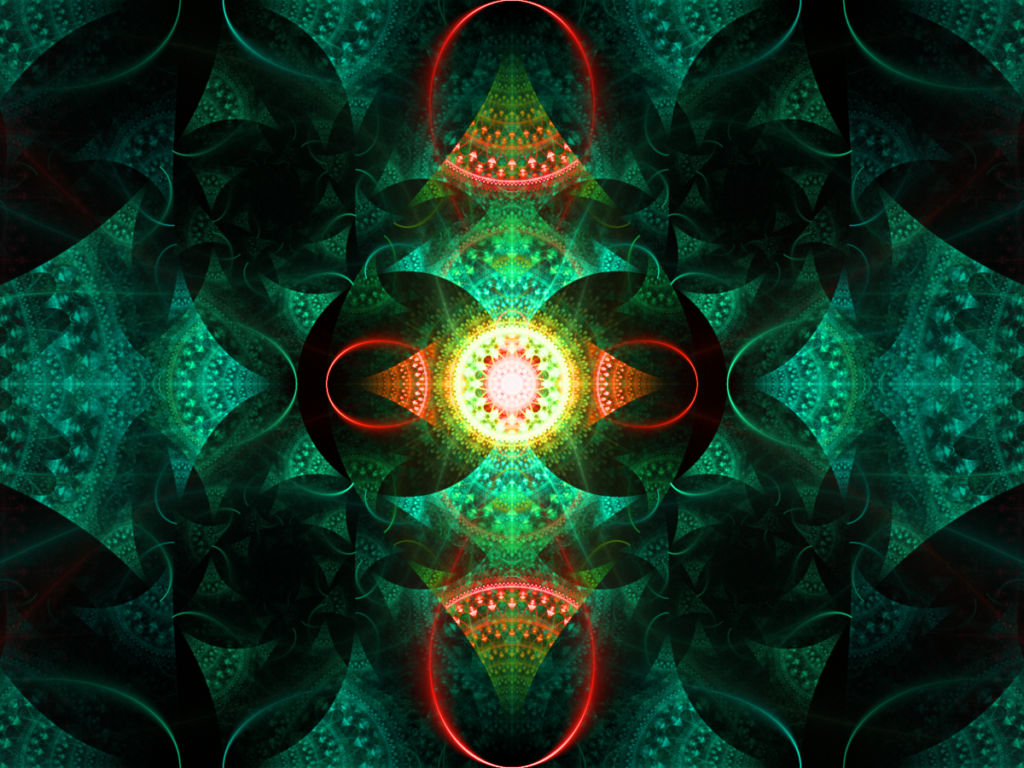
Fractals are more than mesmerizing visuals or mathematical curiosities—they are the mind’s ancestral language, nature’s creative principle, and a bridge between art, science, and the spirit. When we engage with recursive patterns, we aren’t just encountering beautiful forms—we are remembering a deeper rhythm that runs through the cosmos and the self.
Whether you create fractal art, bring these patterns into your spiritual practice, or simply pause to appreciate them in a leaf or cloud, you’re taking part in a tradition as old as humanity itself. As artists and seekers, we step again and again into the field of pattern—the world repeating itself, inviting us to calm, to awe, and to meaning.
Ready to experience more? Dive deeper into fractal art, explore our gallery, or try our meditative exercises to discover how recursive patterns can inspire your daily life. Allow these forms to become not just images on a screen, but living companions on your creative and spiritual journey.