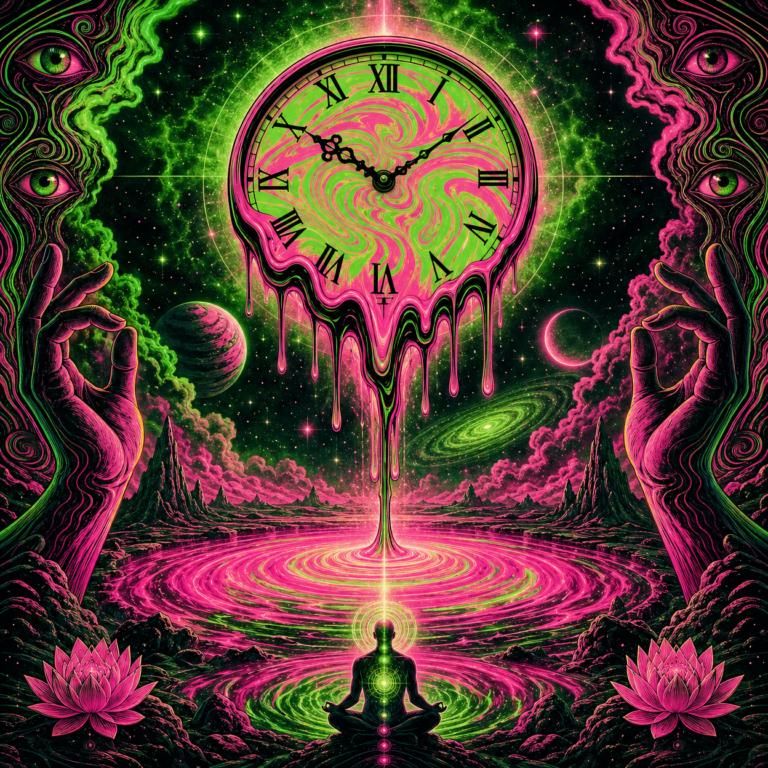
Artwork: The Wheel of Fortune

fractal flame artwork ©Michal Dunaj
Find more information about The Wheel of Fortune in the article below:
The Wheel of Fortune: Exploring Its Symbolism Across Cultures and Modern Tarot
Have you ever felt like life is a rollercoaster you didn’t buy a ticket for? One day you’re riding high on a sudden stroke of good luck, and the next, you’re wondering how everything went so spectacularly off course. If this sounds familiar, take comfort in knowing you aren’t alone. For millennia, our ancestors felt this exact same way. To make sense of life’s unpredictable highs and lows, they turned to a powerful, universal symbol: The Wheel of Fortune.
Far from just a popular television game show, the Wheel of Fortune (or the turning wheel of time and fate) is one of the most enduring motifs in human history. Let’s take a journey together across different cultures, time periods, and the mystical realm of modern tarot to explore what this ancient symbol means—and how it can help us find peace amidst life’s constant changes.
The Medieval Rota Fortunae: The Fickle Hand of Fate
In the ancient Greek and Roman worlds, the concept of a turning wheel was closely tied to the goddess Fortuna (known as Tyche in Greece). She was often depicted spinning a wheel at random, dictating the fates of mortals with a whim.
During the Middle Ages, this concept evolved into the Rota Fortunae. It became an incredibly popular allegory in art, literature, and philosophy, largely popularized by the 6th-century philosopher Boethius.
If you look at medieval manuscripts, you’ll often see Lady Fortune—sometimes blindfolded to represent her absolute impartiality—spinning a massive wooden watermill wheel. Bound to its edges are kings, merchants, and peasants alike. The message was meant to be both a warning and a comfort:
- A Warning: If you are at the top (wealthy, powerful, happy), do not become arrogant, because the wheel will inevitably turn.
- A Comfort: If you are at the bottom (suffering, poor, heartbroken), do not despair. Your position is not permanent, and the wheel will eventually lift you back up.
This European symbol served to remind people of the temporary nature of earthly power, urging them to seek spiritual grounding rather than clinging to material attachments.
Eastern Perspectives: The Bhavachakra and The Dharmachakra
While Europe was meditating on Lady Fortune, Eastern philosophies were developing their own profound wheel symbols. Although they look different, the core theme of cyclicity remains strikingly similar.
In Buddhism, two primary wheels stand out:
1. The Dharmachakra (The Wheel of Law)
This eight-spoked wheel is one of Buddhism’s central symbols. It represents the Noble Eightfold Path laid out by the Buddha. Unlike the Western Wheel of Fortune, which spins you against your will, the Dharmachakra is turned by the practitioner’s conscious choice. It reminds us that while we cannot control the world, we can control our spiritual discipline, our intentions, and our response to events.
2. The Bhavachakra (The Wheel of Life)
In Tibetan Buddhism, the Bhavachakra is a complex, beautiful, and sometimes intimidating depiction of samsara—the endless cycle of birth, life, death, and rebirth.
Held in the fearsome grip of Yama, the lord of death, this wheel illustrates how karma (cause and effect) drives us through different realms of existence. At the very center (the hub) of the wheel sit a pig, a snake, and a rooster, representing the three “poisons” of ignorance, hatred, and desire. These are the inner forces that keep the wheel spinning. The ultimate spiritual goal here isn’t just to enjoy the ride, but to achieve nirvana and step off the wheel entirely.
The Wheel of Fortune in Modern Tarot: Arcanum X
Perhaps our most famous modern encounter with this symbol is the tenth card of the Major Arcana in a standard Tarot deck: The Wheel of Fortune.
In tarot, this card sits exactly at the midpoint of the fool’s journey. It marks the transition from the outer, material world of the first nine cards (like the Emperor and the Lovers) into the deep, inner, spiritual world of the latter half.
When this card appears in a reading, it rarely points to a situation you’ve actively caused. Instead, it signals those massive, unearned shifts in life—a sudden redundancy notice, an unexpected inheritance, or a chance meeting that reroutes your entire career.
In the classic Rider-Waite-Smith deck, the card is incredibly rich with esoteric symbolism:
- The Four Creatures: In the corners, you’ll see an angel, an eagle, a bull, and a lion. They represent the four fixed signs of the zodiac (Aquarius, Scorpio, Taurus, and Leo). They are reading books, symbolizing stability and eternal wisdom anchoring the corners of a chaotic world.
- The Sphinx: Sitting atop the wheel is the Sphinx, representing equilibrium, wisdom, and the cosmic order (or Dharma) that remains steady no matter how the wheel turns.
- Anubis and Typhon: The Egyptian jackal god rises on the right, while the serpentine monster Typhon descends on the left, beautifully illustrating the constant, unavoidable cycle of creation and destruction.
The tarot’s Wheel of Fortune is a gentle, empathetic reminder: You cannot control the events happening to you right now, but you can control your center.
Finding Your Center: Navigating Life’s Cycles
So, what can we take away from these rich, cross-cultural symbols today?
It is completely normal to feel dizzy, anxious, or overwhelmed when life throws you a curveball. We live in a fast-paced society that constantly tells us we must be in control—that if we just work hard enough, or plan well enough, we can avoid the downturns altogether. But the Wheel of Fortune symbolism across cultures tells us a different, much more forgiving story.
It tells us that cyclicity is the very nature of existence.
When you find yourself at the bottom of the wheel, feeling crushed by circumstances outside of your control, treat yourself with profound grace. Your current state is not a punishment, nor is it permanent. The wheel is already in motion, preparing to lift you up again.
And when you are at the top, enjoying the sunshine, love, and success? Relish it. Practice gratitude. Share your joy, your strength, and your resources with those currently at the bottom, knowing that one day, you will inevitably swap places again.
The secret isn’t trying to stop the wheel—that’s impossible. The secret is moving toward the hub. On a spinning tire, the outside edges travel the fastest and experience the most violent motion, but the very center remains perfectly still. Through mindfulness, self-compassion, and a deep understanding of our own values, we can find that quiet center within ourselves.
No matter where you find yourself on the wheel today, take a deep breath and remember: this too shall pass, and a beautiful new turn is just beginning.